

Why Analog Rooms Are Having a Moment
By Gladys Schanstra, Owner & Creative Director, Drury Design
An analog room is a screen-free space in the home designed to support quiet, music, reading, reflection, and other sensory experiences that help people disconnect from constant digital input. Rather than rejecting technology entirely, these rooms create intentional balance – offering a place where attention slows down and the physical world comes back into focus.
Walk through most homes today and one thing becomes clear almost immediately:
screens are everywhere.
Phones glow on countertops. Televisions anchor living spaces. Tablets, laptops, and smart devices quietly compete for attention in nearly every room.
Lately, though, more homeowners are asking for something different.
They want a place to step away.
A place to slow down.
A place that feels grounded in the physical world again.
They might not use the phrase analog room when they first describe it — but that’s exactly what they’re envisioning
A Quiet Counterbalance to a Digital World
Technology brings undeniable convenience, connection, and efficiency. This isn’t about rejecting any of that.
Instead, the growing interest in analog spaces feels more like a pendulum swing toward balance – a purposeful response to constant input, scrolling, and screen-based living.
Many people sense that something essential gets lost when every moment is mediated through glass and pixels. An analog room becomes a way to reconnect with touch, sound, quiet, and imagination – the parts of daily life that screens tend to flatten or rush.

Full-height drapery softens acoustics and light, demonstrating how thoughtful design supports sensory calm as much as visual beauty.
A Real Project Taking Shape
One of our current design projects reflects this shift with particular clarity.
The homeowners did not arrive asking for an “analog room.”
What they described instead was a space centered around a piano, intended as a refuge from screens and digital noise – a room for music, reflection, and presence.
That intention quietly guides every decision in the design.
Light is softened rather than amplified.
Textures invite touch instead of distraction.
Furnishings encourage lingering rather than multitasking.
The goal is not nostalgia for another era, but a room carefully tuned for how people want to feel in their homes now.
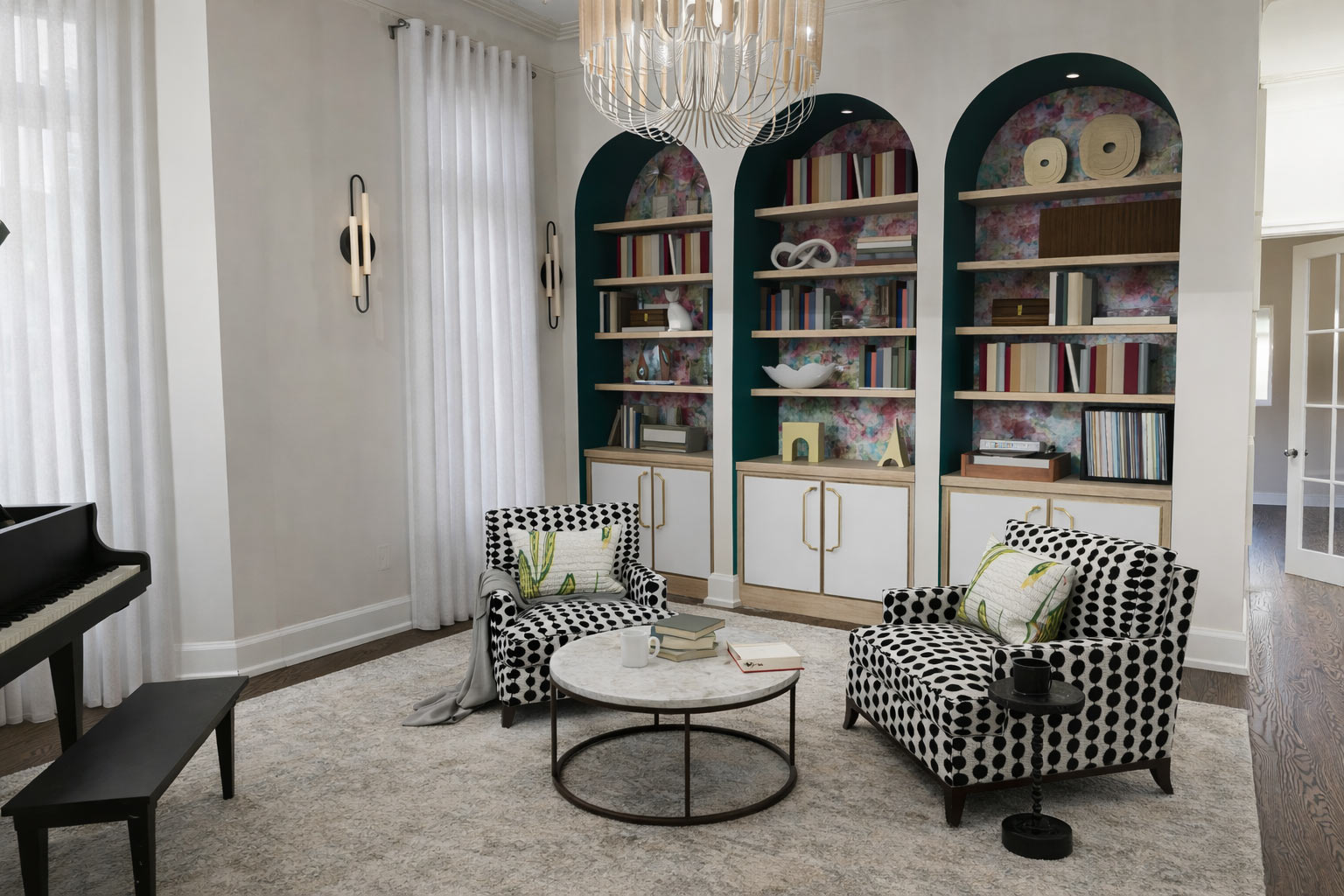
Curated shelving and expressive artwork introduce personality in measured ways, showing how analog spaces can feel both intimate and architecturally composed.
A More Architectural Kind of Analog
Many analog rooms featured in design media lean toward softness and nostalgia — layered textiles, vintage furnishings, and a collected, bohemian atmosphere.
This project explores a different path.
Here, calm emerges from proportion, light, and material restraint rather than visual abundance. Clean architectural lines and balanced geometry create stillness before decoration even begins. The piano becomes a quiet focal point, while shelving, artwork, and upholstery introduce personality in measured ways.
Even comfort is intentional. The drapery option is an important consideration for softening sound. Upholstered seating invites conversation. A rug, introduced thoughtfully, can add warmth underfoot while further refining acoustics.
The result shows that analog living is not tied to a single aesthetic.
It is defined by how a space supports attention, creativity, and rest – whether expressed through layered nostalgia or quiet architectural clarity.
Designing for the Human Senses
Analog rooms succeed when they engage the senses that digital life often ignores.
Natural materials bring warmth and authenticity.
Layered textiles soften both sound and atmosphere.
Books, instruments, and physical media reward slower interaction.
Gentle, atmospheric lighting replaces the urgency of overhead glare.
Together, these elements create an environment that supports creativity, restoration, and meaningful conversation – whether the room is used in solitude or shared with others.
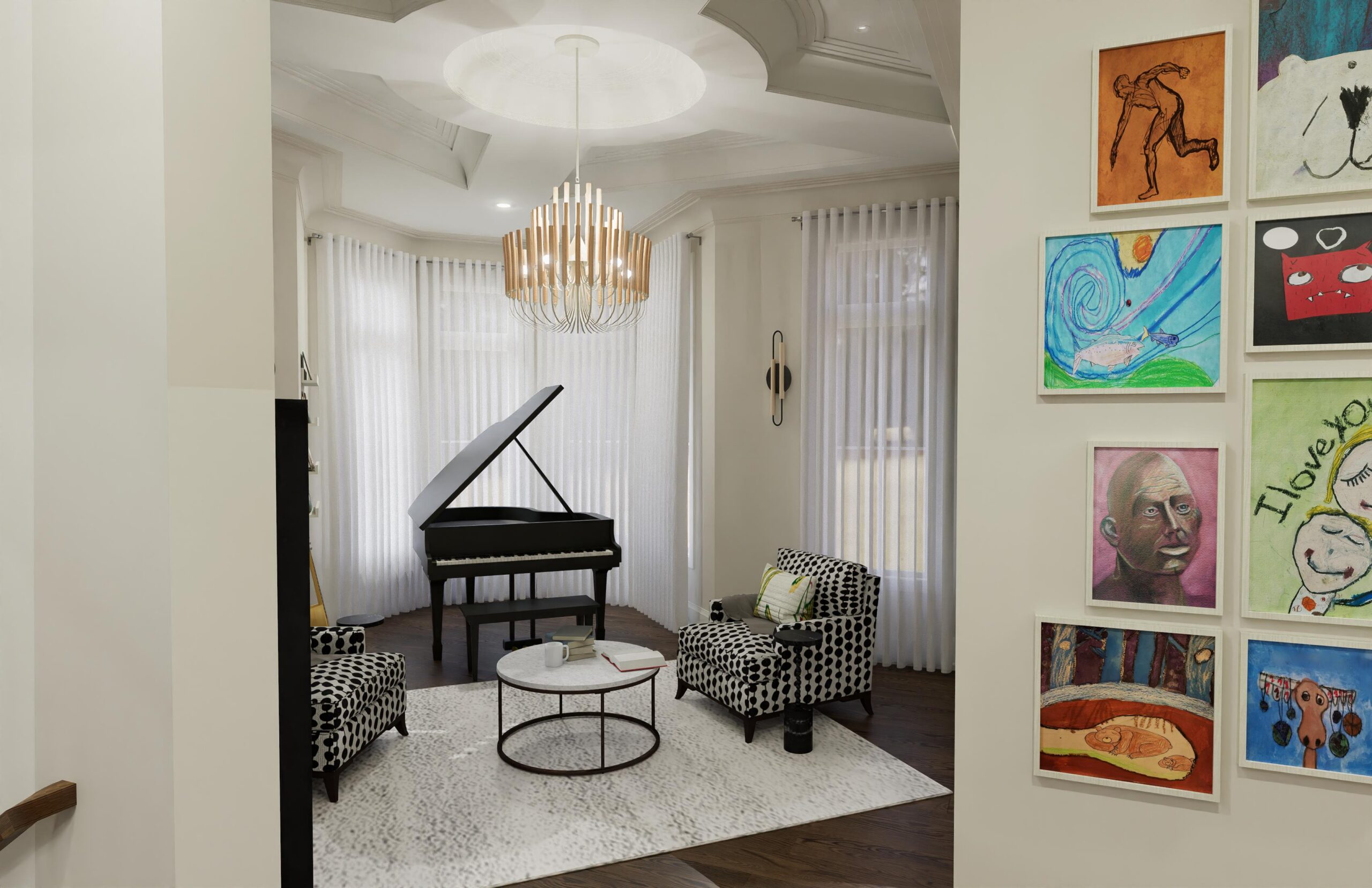
Framed by clean architectural lines and natural light, the piano anchors a screen-free room designed for music, reflection, and quiet presence.
Sound Matters More Than Most People Realize
An often-overlooked dimension of analog rooms is acoustics, where interior design and listening comfort truly meet.
A simple clap test from the primary listening positions — the places where people sit to enjoy music or conversation — often reveals just how much difference thoughtful design can make. Before finalizing the room, clap once and listen carefully. After the initial sound fades, you may notice a lingering echo, a fluttering resonance, or even a robotic cascade of reflections overlapping one another.
These effects are typically caused by hard, perfectly parallel surfaces and sharp 90-degree corners. Fortunately, they are highly controllable. Thoughtful architectural and decorative choices can dramatically improve how a room sounds and feels, including:
- substantial crown molding to soften upper corners
- plants placed in room corners
- layered artwork with varied frame depths
- floor-to-ceiling curtains
- slight asymmetry in seating or speaker placement
When acoustics are right, the room doesn’t just sound better – it feels calmer, allowing music, conversation, and quiet moments to settle naturally into the space.
A sanctuary should feel comfortable to the ear as well as the eye.
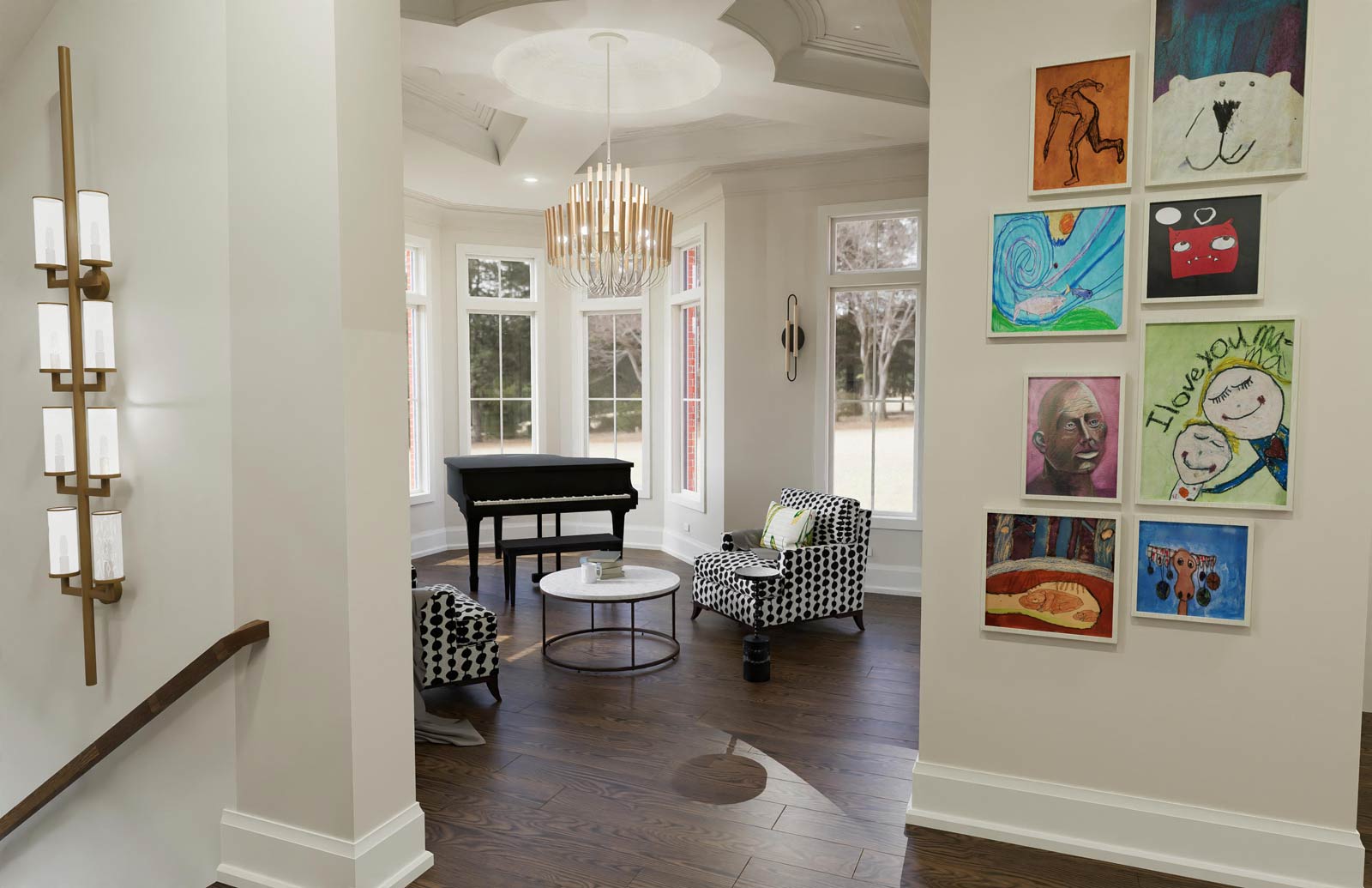
Notice the difference? Scroll up to see what this rendering looks like with drapes and a rug. In addition to the softer feel, drapes and rugs also contribute to softer acoustics.
Technology Still Has a Place — Just a Different One
Creating an analog space doesn’t mean eliminating technology entirely.
Many clients drawn to these rooms are fascinated by the warmth of vintage tube-based audio systems — turntables, receivers, and speakers that produce a richer, more relaxed sound than some ultra-precise modern digital equipment, which can feel pristine but slightly clinical.
In this context, technology becomes supportive rather than dominant, enhancing presence instead of competing with it.
Why This Moment Matters
Design trends often reveal deeper cultural shifts.
The renewed interest in analog rooms suggests a changing definition of luxury – one less focused on speed or automation and more centered on:
- time to think
- space to create
- freedom from constant interruption
In a fast-moving digital world, a room devoted to quiet attention may be one of the most meaningful investments a homeowner can make.
A Growing Conversation
The idea of screen-free, sensory-focused living is gaining national attention. I recently shared design insights on analog rooms with Real Simple, contributing to the broader conversation about how homes can support balance and wellbeing.
As more homeowners explore this direction, thoughtfully designed analog spaces are likely to become not just a passing trend, but a lasting expression of restorative living at home.