

Are Open Shelves Still Trending?
It’s easy to find content decreeing that open shelving is a bad idea.
• 6 Kitchen Trends Designers Regret Trying This Year—and What They’d Do Instead
• 7 Kitchen Trends Experts Say Could Make Your Home Harder to Sell
• Are Open Kitchen Shelves Going Out of Style? Interior Designers Weigh In
But it’s just as easy to find articles and designer blogs that say the opposite: open shelves are a great idea.
• Everyone Says Open Shelving Is Over—Here’s Why I Strongly Disagree
• We Asked Interior Designers If Open Shelving Is Still Worth the Hype—Here’s When to Consider It
• Why Interior Designers Specify Floating Shelves on Every New Build in 2026
We have clients who love them and clients who are adamantly against the idea of having them.
There are pros and cons, for sure. But lost in the pro/con discussion is the art of designing spaces with open shelves, the nuances of selecting open shelving materials, and the philosophical notions that clients who love open shelving love to talk about. Oh, and did you know there’s an “in-between” style of open shelving?
We asked several of Drury Design’s Senior Designers a simple question: Are open shelves still relevant in today’s homes?
Here’s what they had to say…
Design for People, Not Trends
Gladys Schanstra, Owner / Creative Director
Gladys sees the open shelving debate as part of a larger cycle in design — one that tends to repeat itself more often than people realize.
“The question of whether open shelving is “in” or “out” has less to do with shelves and more to do with human nature.
We’ve seen this happen countless times in the design world. Something becomes popular, reaches a peak, and then people rush to declare it over. A few years later, it returns in a slightly different form and the cycle starts all over again.
Open shelving certainly has practical pros and cons. Some people love the accessibility and the opportunity to display things they enjoy seeing every day. Others prefer the simplicity of closed storage and don’t want to worry about dust or visual clutter.
Both viewpoints are valid.
The more important question is whether open shelving makes sense for the person living in the space. In some homes, that might mean floating shelves. In others, it could mean glass-front cabinetry, illuminated display cabinets, or built-ins that create a similar effect while keeping things more contained.
Good design isn’t about following headlines. It’s about understanding how people live.
Personally, I like open shelving in the right places. I enjoy displaying things that are meaningful and visually pleasing. But I also appreciate closed storage where life’s less attractive necessities can stay hidden.
That’s why the question isn’t whether open shelving is trending. The question is whether it serves a purpose.”
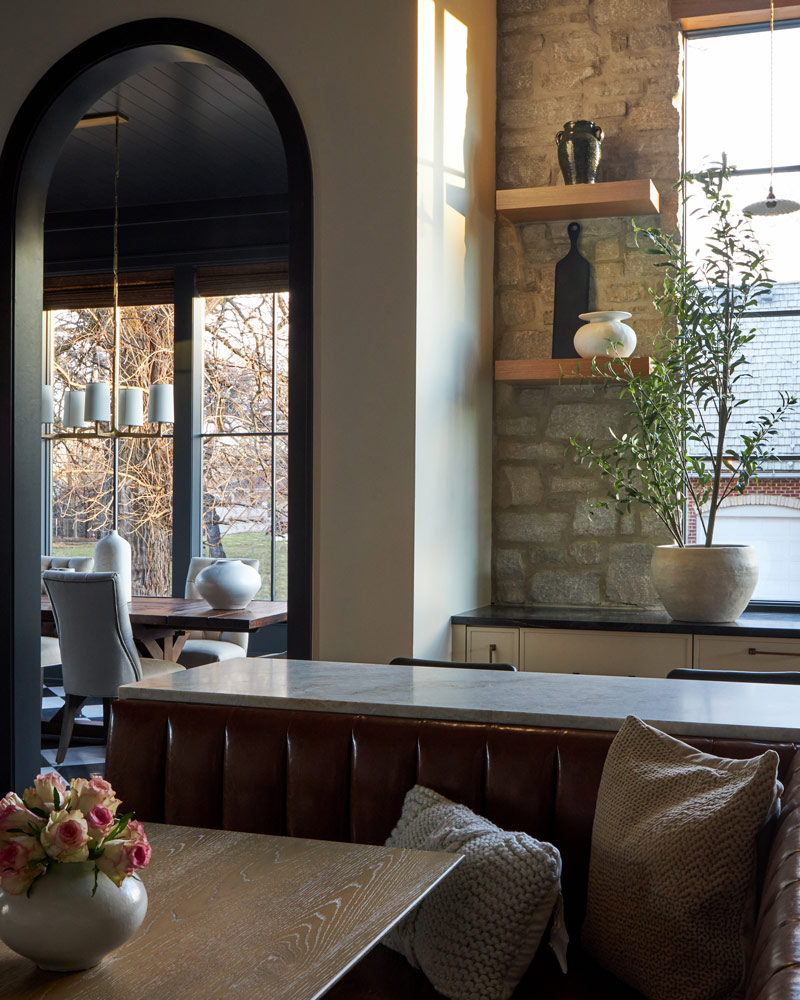
When thoughtfully styled, open shelving can add personality and visual breathing room without overwhelming a space.
Not Every Empty Wall Needs a Shelf
Lauren Feurich, Senior Designer
Lauren believes the success of open shelving often comes down to one simple question: What’s actually going to live there?
“When homeowners talk about open shelving, one of the first things I ask is what they plan to put on it.
Sometimes the answer is immediate and meaningful. They have collections they love. They have beautiful glassware. They have items that deserve a place on display.
Other times, they simply see an empty wall and assume something needs to go there.
That distinction matters.
Open shelving works best when there’s intention behind it. If shelves are added simply to occupy space, they often become catch-alls for random objects that create visual clutter rather than visual interest.
I also think homeowners should be honest with themselves about how they live. Some people genuinely enjoy maintaining curated displays. Others hope open shelving will motivate them to become more organized.
Sometimes that happens. Sometimes it doesn’t.
If someone truly loves the look, they’re often willing to put in the effort required to keep it looking great. The key is making sure the shelves have a purpose before you put them in.“

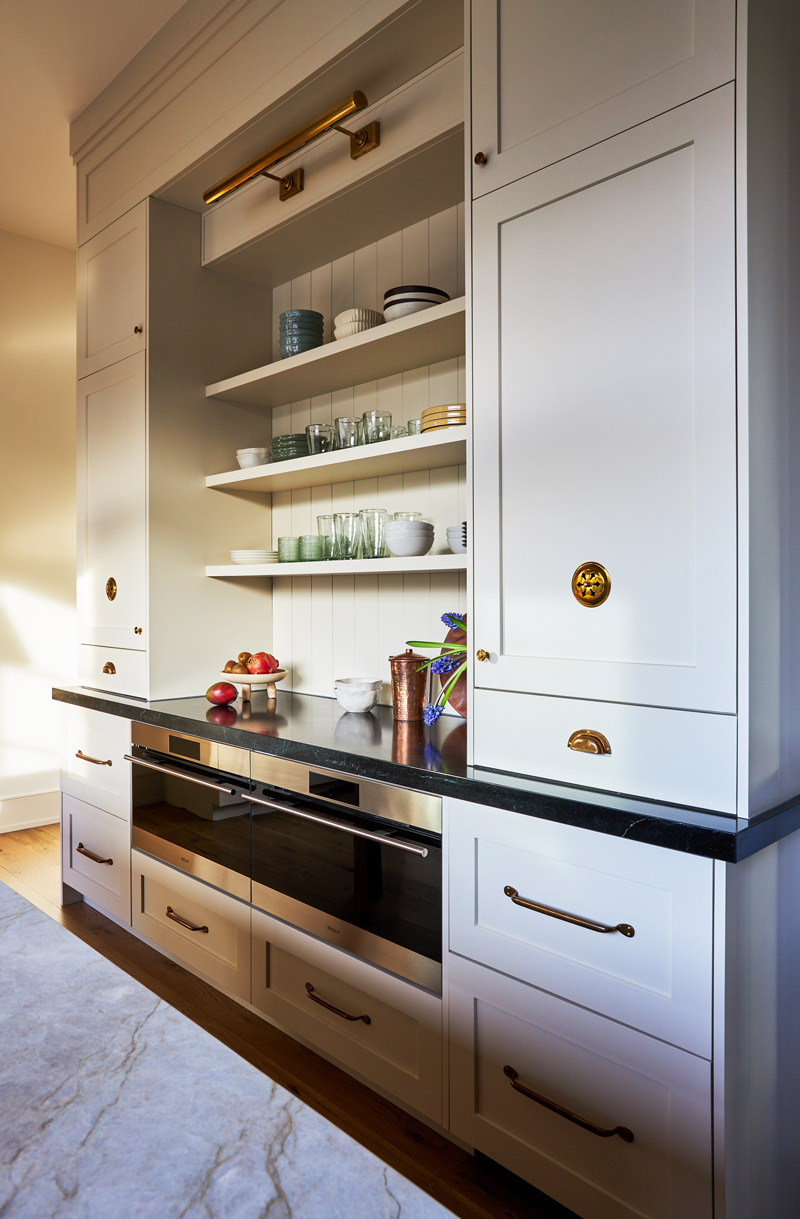
Integrated open shelving can break up a wall of cabinetry, creating visual interest while keeping everyday items within easy reach.
When Open Shelving Becomes A Design Feature
Alicia often uses open shelving not simply for storage, but as an opportunity to introduce materials, lighting, and personality into a space.
“Open shelving can be beautiful when it’s thoughtfully integrated into the overall design.
Some homeowners want everything tucked neatly behind doors. Others have collections, serving pieces, artwork, or heirlooms that deserve to be seen. One recent client wanted her beautiful cake stands and specialty dishware displayed. Another wanted Chihuly glass pieces featured as a focal point within the kitchen.
In both cases, the shelving became part of the design story rather than simply a storage solution.
One misconception is that open shelving only means floating wood shelves mounted to a wall. Glass-front cabinets with interior lighting can provide a similar display opportunity while offering some protection from dust. Shelves can be built from a variety of materials and become a design element in their own right.
Open shelving can also help break up long runs of cabinetry. Instead of wall cabinet after wall cabinet, shelving can create visual breathing room while adding character and personality.
As for whether open shelving is still trending, I think that question misses the point. If it supports the way a homeowner wants to live and helps create the look they love, then it remains relevant.“

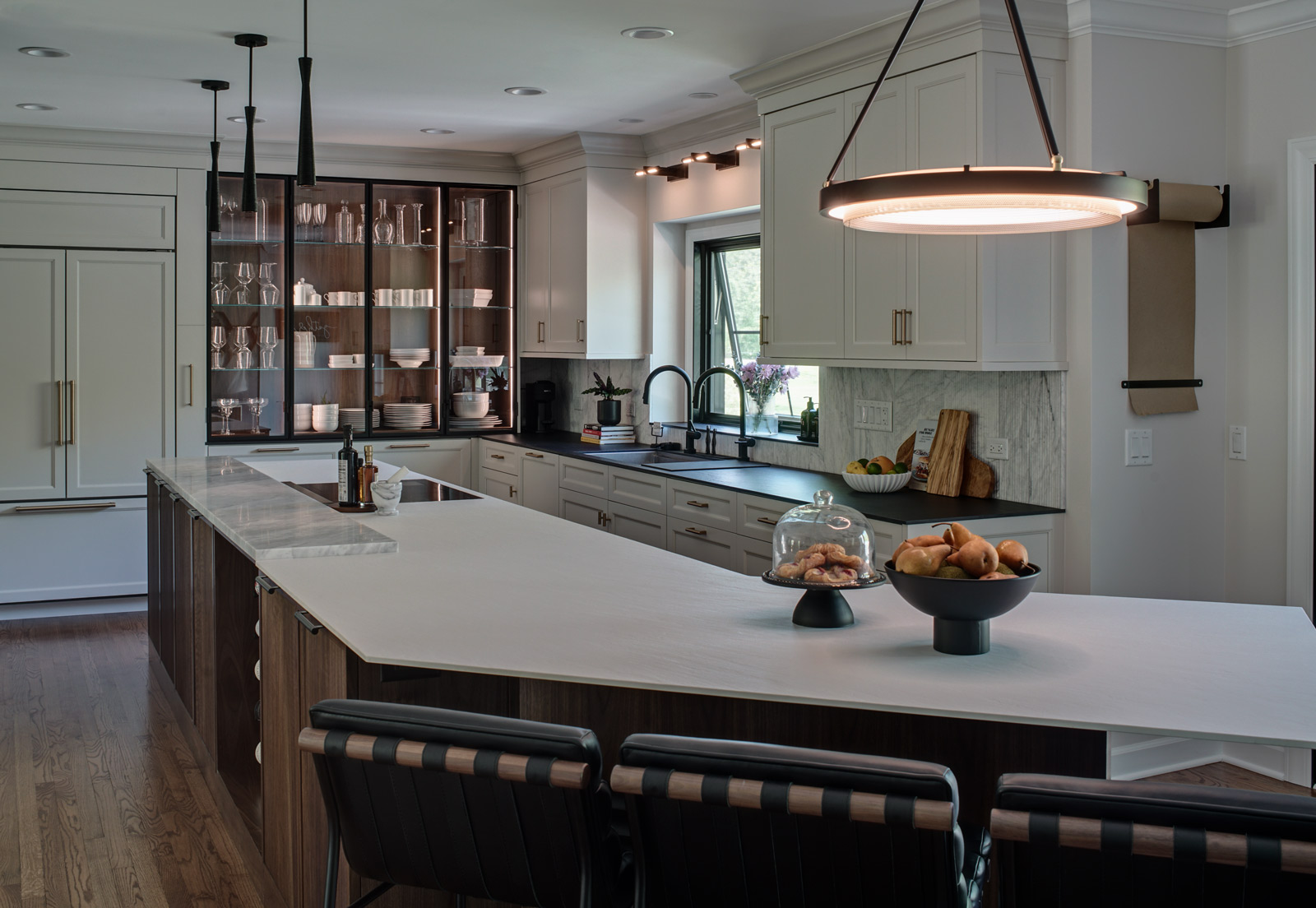
Glass-front cabinetry offers many of the benefits of open shelving—display, personality, and visual interest—while providing a layer of protection from dust and everyday clutter.
A Place for Meaningful Things
Samantha Schoell, Senior Designer
For Samantha, open shelving is less about trends and more about creating opportunities for homeowners to express themselves.
“I like open shelving because it gives people a place to display the things that matter to them.
Maybe it’s beautiful dishware collected over time. Maybe it’s artwork, framed family photos, or meaningful objects gathered through travel. Whatever it is, open shelving creates an opportunity to make a space feel more personal.
There’s also an in-between option that many homeowners overlook: glass-front cabinetry. Sometimes the cabinet itself becomes the focal point. Beautiful glass doors can provide visual interest while still offering some protection from dust and helping maintain a cleaner appearance.
Of course, open shelving isn’t for everyone. I’m a clean freak, so I completely understand why some people prefer closed storage. Anything left out in the open requires more attention and maintenance.
But for homeowners who enjoy styling their spaces and keeping everyday items visible, open shelving can create a nice balance between function and personality.
Would I include it in my own home? Absolutely. In fact, I already have open shelving in my home and enjoy it.”

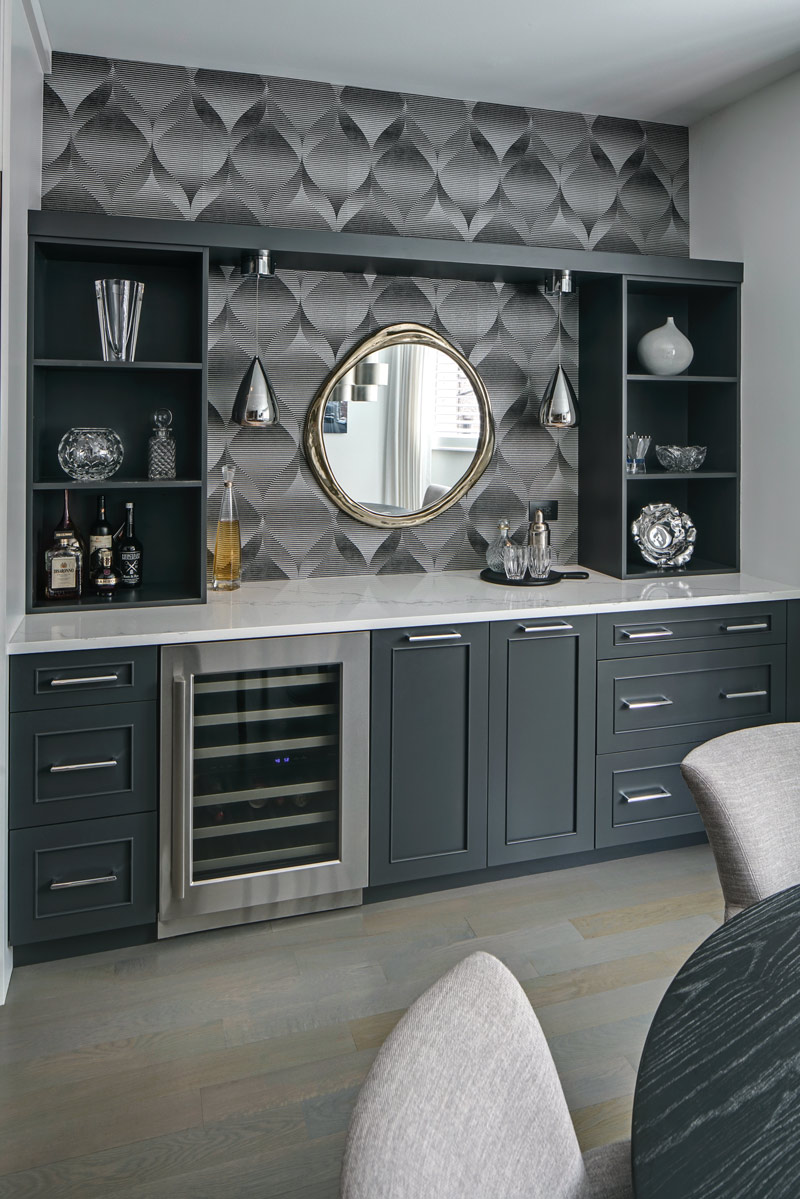
Open shelving often shines in bar areas and entertaining spaces, where favorite bottles, glassware, and collected pieces become part of the room’s personality.
Function First, Dust Second
Basia appreciates the character open shelving can bring to a room — but she also believes homeowners should be realistic about maintenance.
“I like open shelving. That said, I probably like it everywhere except the kitchen.
From a practical standpoint, I don’t love the idea of dishes, bowls, and glassware sitting out where they can collect dust between uses. In a restaurant or café, those items are constantly being handled, washed, and reused. In a home, they may sit untouched for days. That’s a different reality.
For me, the appeal of open shelving is less about storing everyday dishes and more about displaying things that add personality to a room. Decorative objects, books, artwork, or carefully selected accessories can make a space feel more interesting and lived-in.
Would I use it in my own dream home? Possibly. I could see using it for mugs or other items that get used regularly. But for most kitchen storage, I’d probably lean toward closed cabinetry.
The key is understanding your own habits. If you don’t mind the maintenance and enjoy the look, open shelving can be a great addition to a home.”

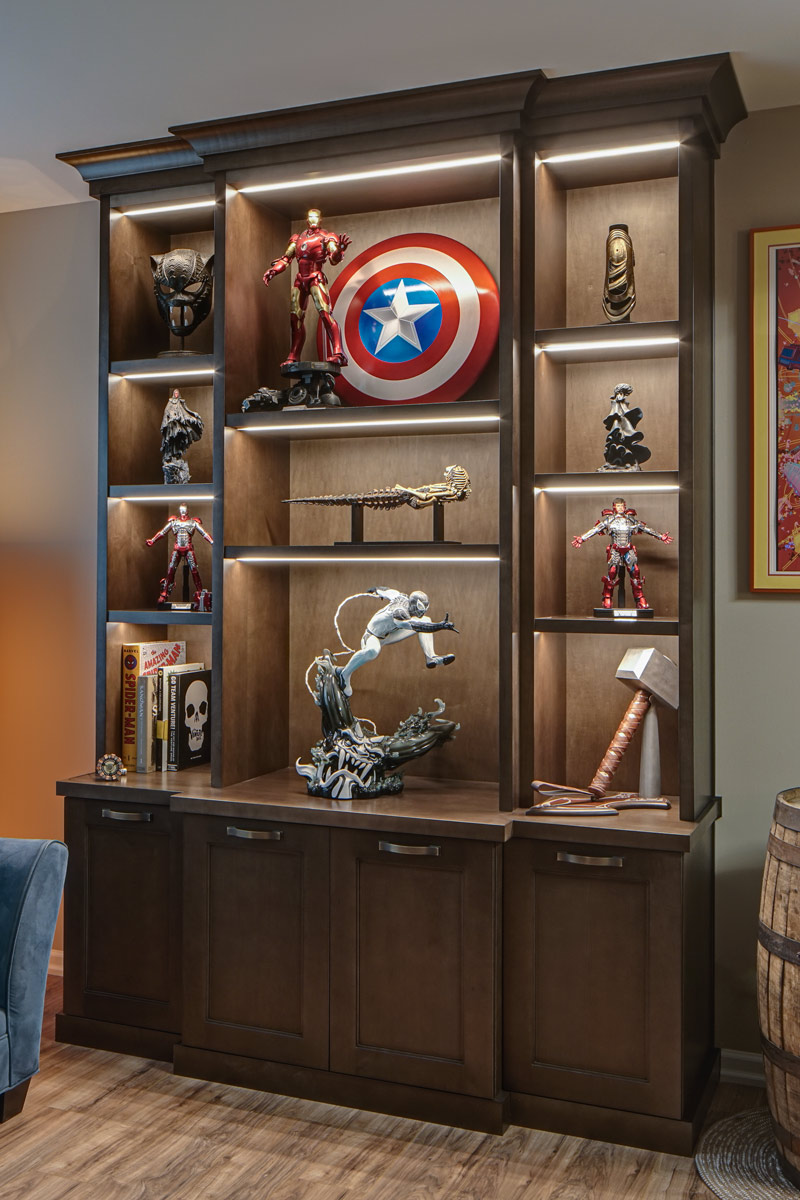
Open shelving can provide a dedicated place to showcase the collections, memorabilia, and personal treasures that make a house uniquely yours.
Open Shelving Is a Lifestyle Choice
Kelly sees open shelving as less of a trend and more of a reflection of how people want to live in their homes.
“I don’t think open shelving will ever completely disappear. There will always be homeowners who love the look and the lifestyle that comes with it.
Personally, I prefer it in smaller doses, especially in kitchens. Open shelves can collect dust and grease, and they require a little more attention to keep looking their best. But in the right location — over a refrigerator, in a niche, or as part of a display area — they can help a space feel lighter and more open.
One thing I find interesting is how differently people approach open shelving around the world. Some European kitchens embrace it almost entirely. Everything is visible and easily accessible. It’s a different philosophy — one that prioritizes convenience and openness over hiding everything behind doors.
That’s why these conversations often become about more than shelves. Sometimes homeowners are looking for a space that encourages them to live differently, be more intentional, and keep only the things they truly use and enjoy.
I’m also a fan of some of the newer hybrid approaches, like bistro shelving with metal supports and glass shelves. The shelving itself becomes part of the design, which encourages people to be more thoughtful about what they display.
Outside the kitchen, some of my favorite places for open shelving are bars, wine nooks, and entertaining spaces. Those are often the areas where homeowners most want to showcase the things that bring them joy.”
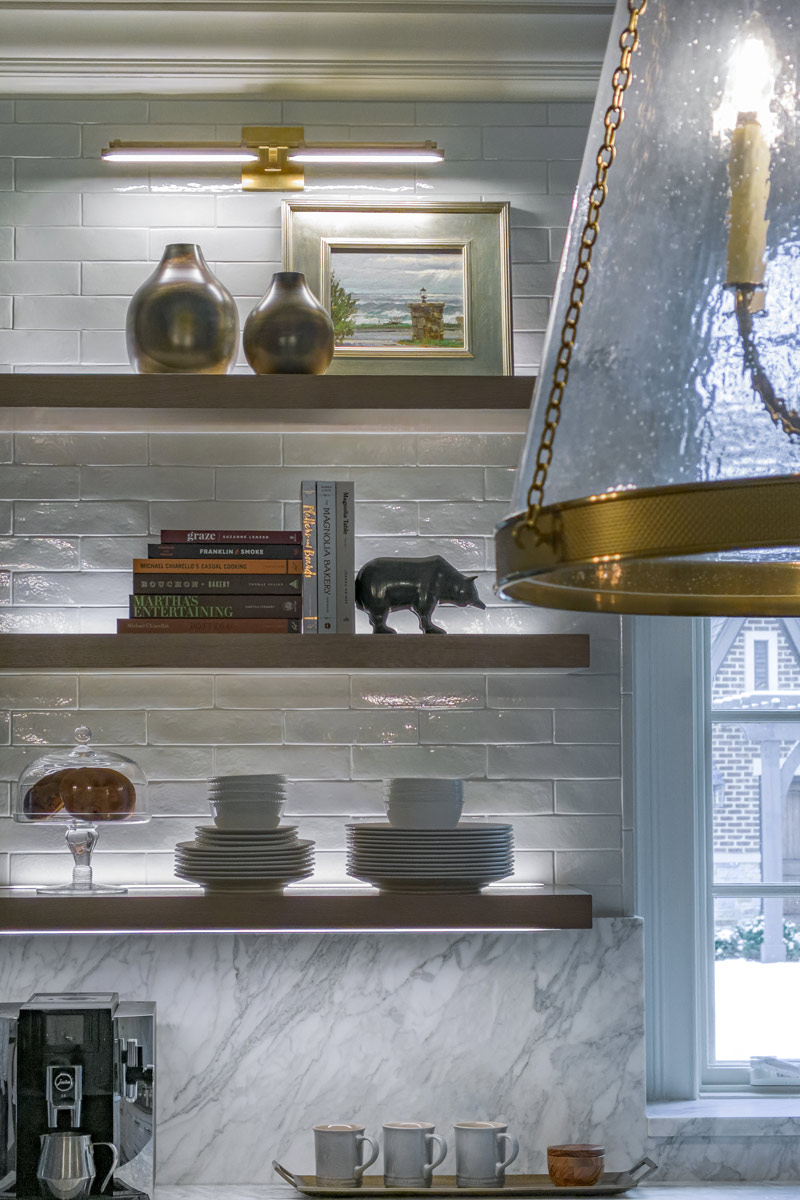
Open shelving can turn everyday items into part of the design, keeping frequently used dishes, books, and serving pieces both accessible and beautifully displayed.
We Follow Design Trends
Part of our job is staying informed about what’s new, what’s emerging, and what homeowners are asking for.
Open shelving is a perfect example of why sweeping design declarations should be taken with a grain of salt. The same internet that says open shelving is dead will tell you marble is impractical, gray kitchens are over, tubs are essential, tubs are unnecessary, and so on.
Experienced designers know the truth is usually more nuanced. Good design isn’t about blindly following trends — or ignoring them. It’s about understanding how a particular person lives and creating a space that supports that life beautifully. That’s why we spend more time learning about our clients than chasing headlines. Trends come and go. Thoughtful design lasts.
If you’re wondering whether open shelving is right for your home, we’d be happy to help you think through the possibilities.