

The Beauty of a Life Well Lived
How to choose between natural stone and engineered surfaces for the home you want to live in
If you stumble across a charming flower market during a three-day vacation, would you spend $25 on fresh flowers for your hotel room?
Many people wouldn’t. Drury Design Owner and Creative Director Gladys Schanstra did.
Not because the flowers would last, but because beauty – even temporary beauty – changes the way a space feels.
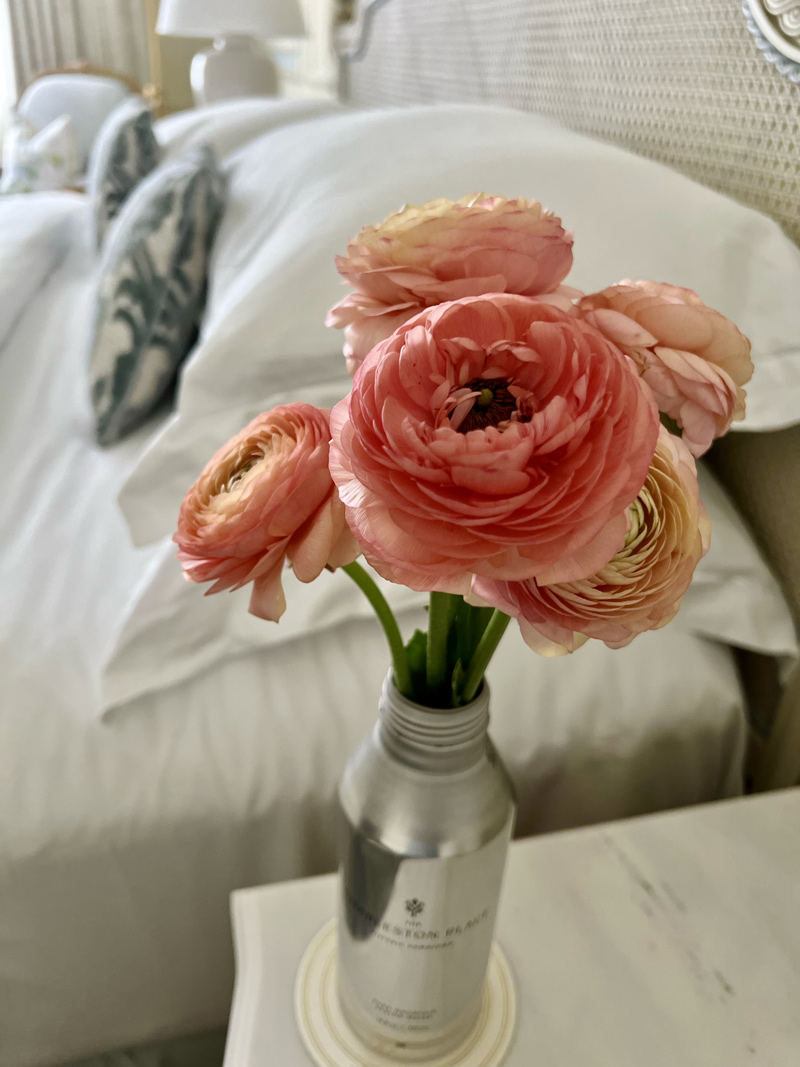
During a recent trip to Charleston, South Carolina, Gladys discovered a flower vendor at an open-air market. Although she was only in town for a few days, she couldn’t resist putting together a small bouquet of ranunculus. Back at the hotel, she tucked the stems into a stainless steel water bottle and suddenly the room felt a little more personal. A little more beautiful.
This seemingly unrelated story perfectly explains a conversation we’ve been having around the office recently: why do some people like materials that age while others don’t?
Natural stone like marble can look different after a few years, taking on dings and a new patina from sheer use. Unlacquered brass finishes on faucets and sconce mounts change colors and spots appear as time marches on. Wood floors take on a layer of character with scuffs and scrapes. But here’s the thing – man-made materials can change over time, too. Don’t let anyone tell you that the latest technological innovation means that a product will look new forever. In essence, trying to chase eternal newness can be maddening.
That’s when Gladys’ hotel flowers story became relevant. Some people would never buy flowers while on a trip, and that’s okay. Others are simply drawn to natural things.
Sometimes the choices we make are about choosing how we want to live.
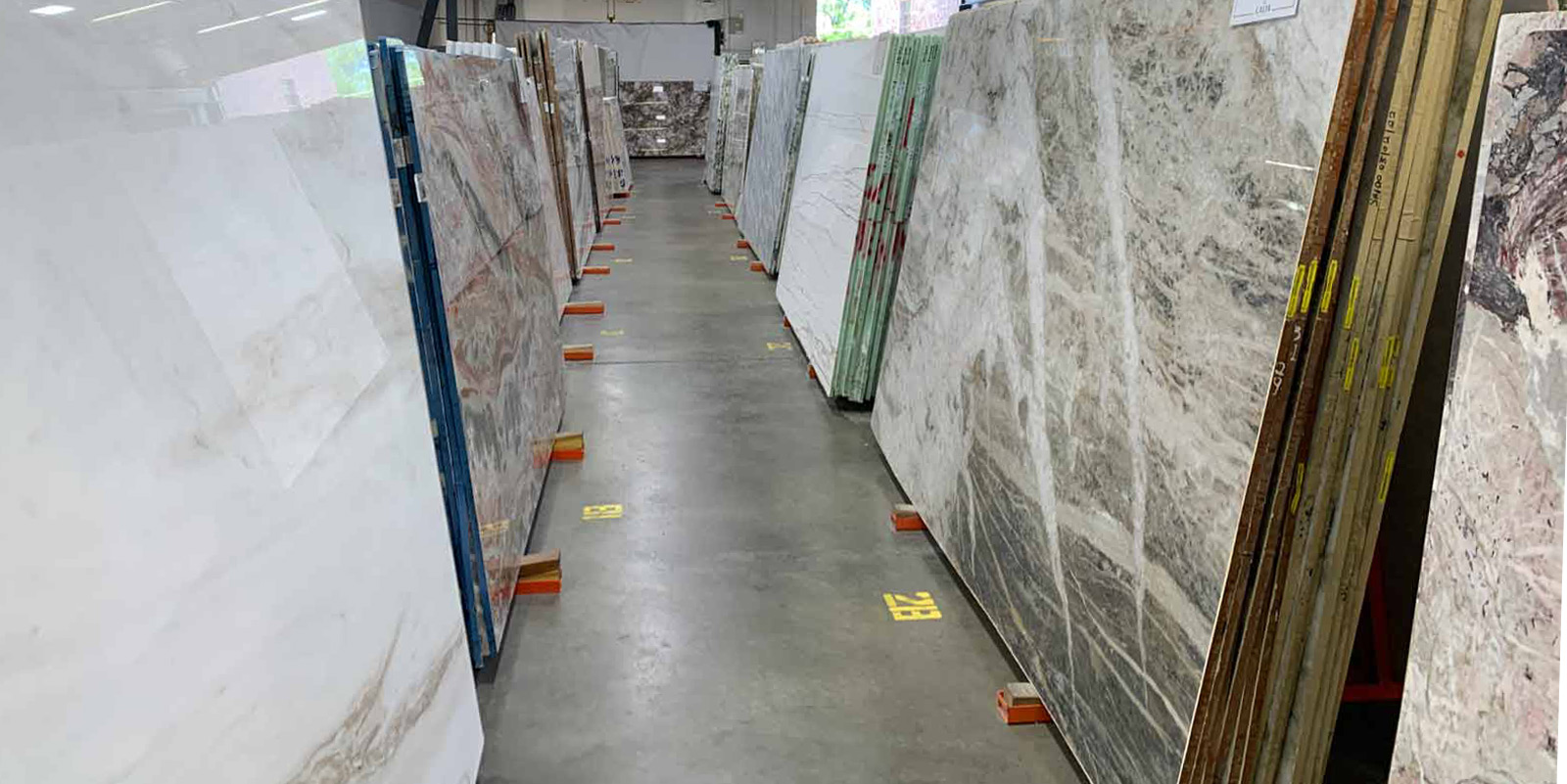
Natural Stone vs. Engineered Surfaces
There’s no right or wrong answer here. Not one designer argues that natural stone is always better. Not one argues that engineered surfaces are the obvious choice.
Instead, every designer circles back to the same philosophy: the best material is the one that fits the homeowner.
If you’re investing in a kitchen remodel or bathroom renovation, it’s completely understandable to want every surface to look exactly as it did on installation day. That’s why engineered materials are so popular. Quartz countertops, for example, offer consistency, low maintenance and peace of mind for homeowners who don’t want to think about sealing stone or worrying about etching. Those are legitimate advantages (just keep in mind that nothing stays new forever.)
Natural materials simply offer something different.
- Marble develops subtle etching. Wear and tear becomes a unique patina.
- Soapstone gradually deepens in color.
- Unlacquered brass darkens where it’s touched.
- Hardwood floors accumulate tiny reminders of everyday life.
The question isn’t which approach is better. The question is: which approach allows your home to feel more like you?
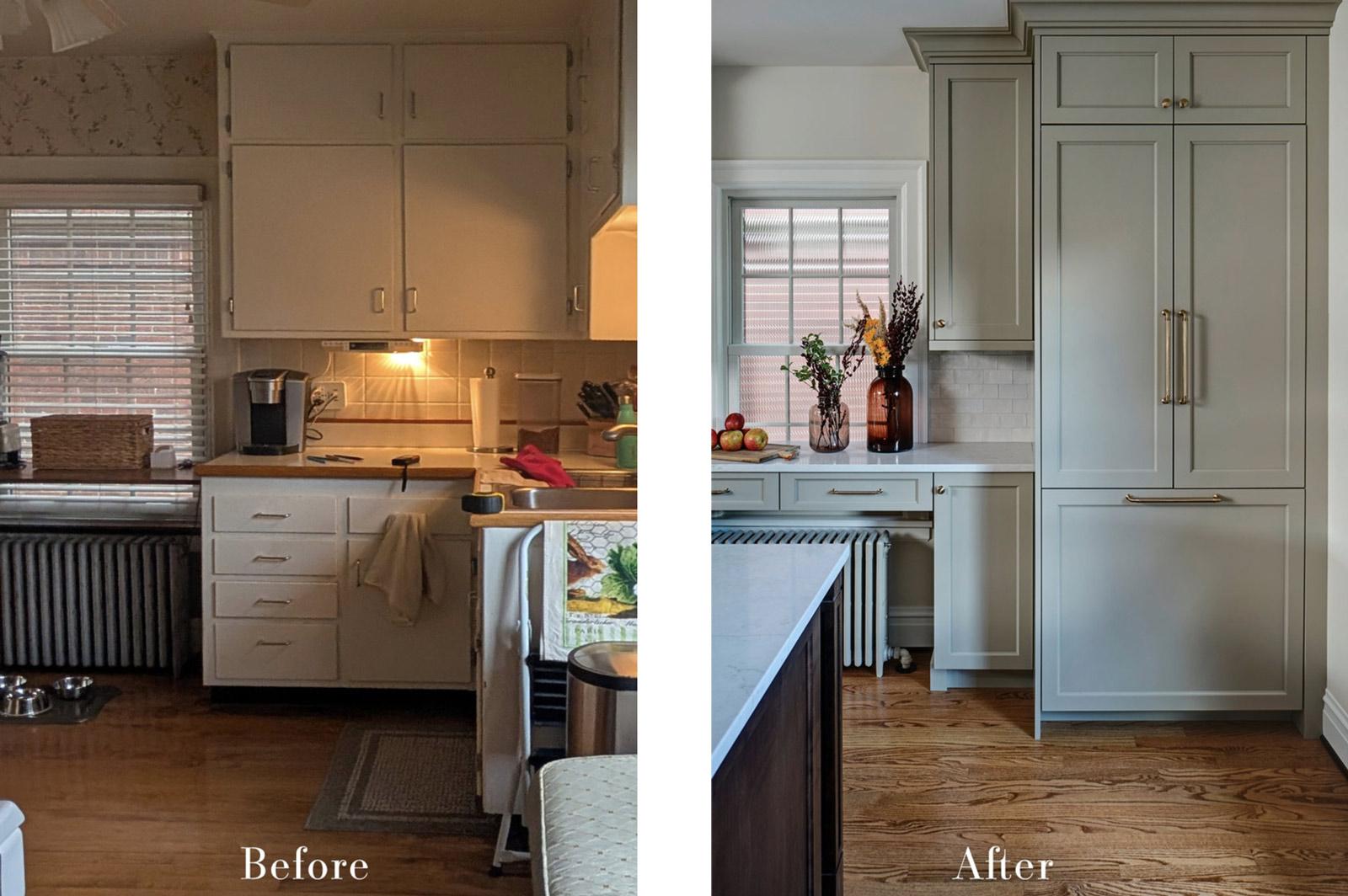
This recent kitchen remodel by Samantha Schoell includes new wood flooring that showcases the natural beauty of the wood grain.
“It’s About Understanding What You’re Signing Up For.”
For Senior Designer Samantha Schoell, conversations about natural stone almost never begin with the stone itself. They begin with expectations.
“Clients often arrive with strong opinions about marble,” she explains. Some have admired it for years. Others have crossed it off their list before they’ve even seen a slab in person, having heard stories about etching, staining or maintenance. “Both reactions are understandable,” she says.
“My job isn’t to convince someone that marble is better than quartz. It’s making sure they understand what they’re signing up for. Every material has strengths. Every material has limitations. Once clients understand how a material is going to perform over time, they usually become much more confident in their decision because they’re choosing it with realistic expectations.”
Samantha sees natural materials much the way she sees antiques.
“The point of using these materials is that they have their own character. When you buy an antique table, you don’t expect it to look like it just came out of the factory. You appreciate the little imperfections because they’re part of its story. Natural stone is similar. It’s going to develop some character over the years. If you appreciate that, you’ll probably love it even more as time goes on. If seeing those changes is going to bother you every day, then there’s absolutely nothing wrong with choosing a different material.”
Instead of asking whether marble is “worth it,” Samantha encourages homeowners to ask a more personal question:
Will I enjoy living with this material for the next ten years?
If the answer is yes, you’ll likely never regret the decision.

Basia Kozub’s most recent kitchen features Taj Mahal marble countertops, backsplashes and shelves.
Warmth Isn’t an Accident
Senior Designer Basia Kozub believes natural materials have a warmth that’s difficult to replicate. Every slab of marble is unique, wood grain varies from board to board and soapstone develops differently in every home. Those subtle variations make a space feel organic rather than manufactured.
“I think people are naturally drawn to things that come from nature,” Basia says.
“When I travel through Europe, I notice that people aren’t trying to preserve everything in perfect condition. Stone steps have been worn down by hundreds of years of people walking on them. Marble has scratches. Buildings have character. Nobody looks at those things as flaws. They’re part of what makes those places beautiful.”
That perspective changes the way she thinks about aging materials at home.
“If everything is perfectly smooth, perfectly white and perfectly uniform, sometimes it starts feeling a little… clinical. Natural materials soften a space. They feel warmer. And because they already have variation, people tend to worry less about every little mark or scratch. Those materials get us out of that mindset where everything has to stay pristine.”
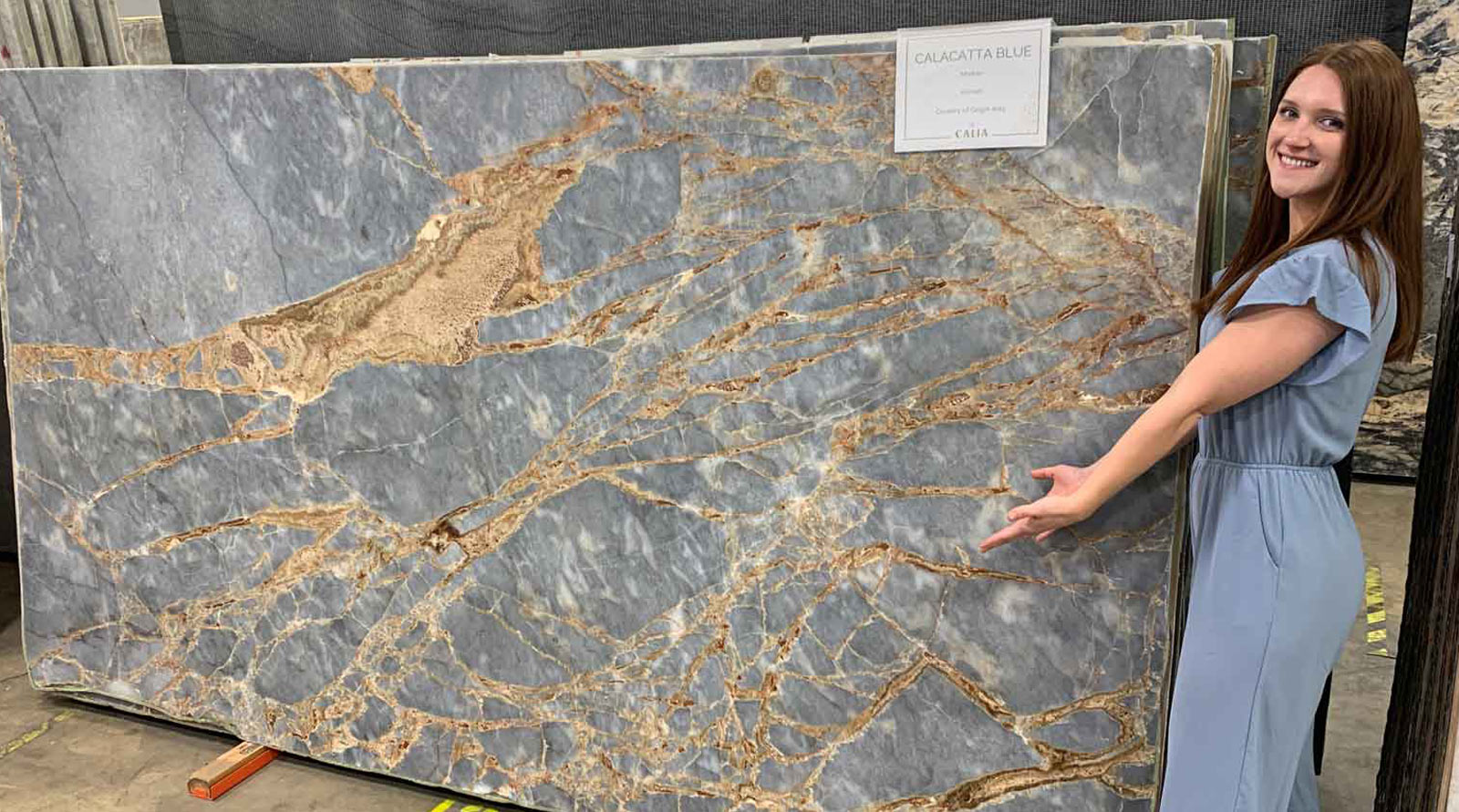
Natural slab shopping can involve unexpected moments of delight. Here’s Lauren Feurich at Calia Stone Boutique embracing a stunning slab of Calacatta Blue marble that matches her outfit!
Homes Are Meant to Be Lived In
Senior Designer Lauren Feurich is quick to point out that appreciating materials that age doesn’t mean that you have to go all in
“I love natural stone. But that doesn’t automatically mean I want every finish in a house to age the same way. There are places where I love the look of a patina, and there are places where I personally prefer something to stay more consistent.”
That kind of nuance reflects the way she works with clients. Design decisions are about understanding what feels right for the people who live there.
“I don’t usually hear people say, ‘Absolutely not.’ It’s more like, ‘I never thought about it that way.’ Once they understand why someone would intentionally choose a material that changes over time, the conversation becomes completely different. They’re no longer asking whether it’s good or bad. They’re asking whether it’s right for them.”
For Lauren, that’s where the discussion becomes interesting.
“I appreciate things looking like they’re lived in and loved. To me, that’s very different than something looking neglected. Those little signs of everyday life don’t necessarily take away from a home. Sometimes they become part of what makes it feel special.”
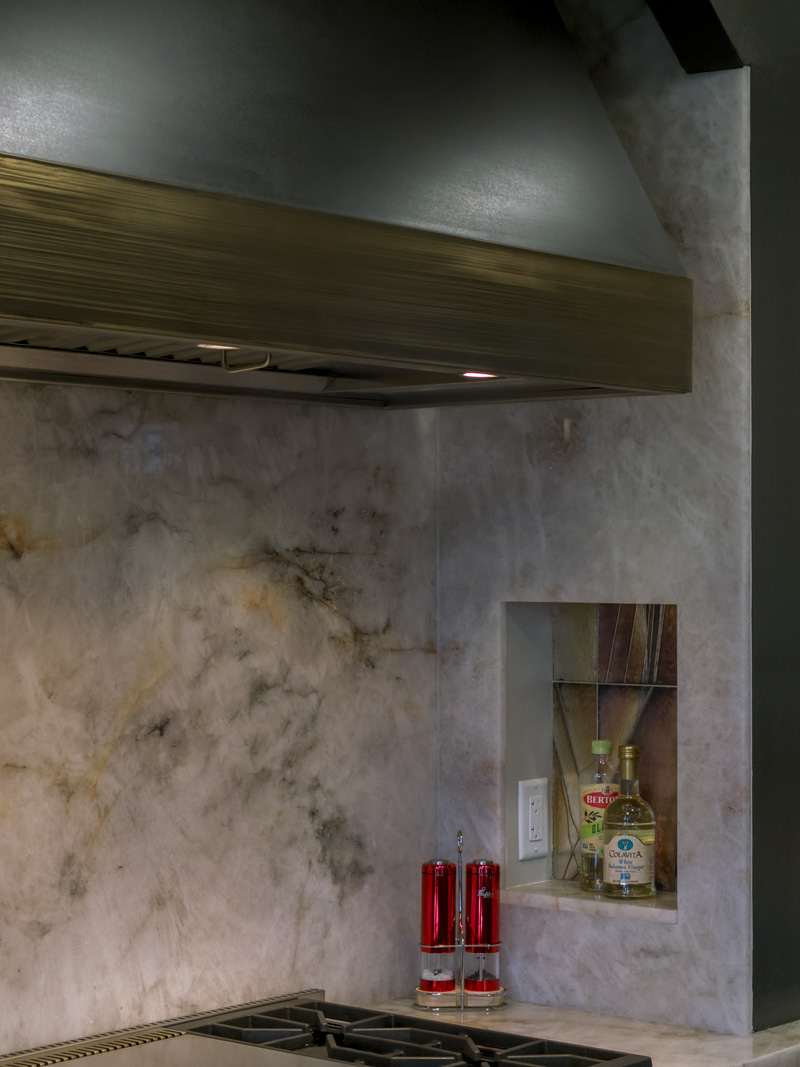
This kitchen by Alicia Saso features a full-height Lumix quartzite surround backsplash. Lumix quartzite is a natural Brazilian stone known for its translucent, luminous white and soft grey background accented by delicate linear veining.
Go With What Inspires You
Senior Designer Alicia Saso understands why homeowners sometimes hesitate to choose natural materials. She’s the same way.
“It’s a big investment, and you want to protect it. I have my own obsessions about keeping things clean and perfect. I get it. So it’s fun for me to see people surprise themselves. They might walk into a room with marble countertops and absolutely love the way it feels. I tell them that feeling is worth paying attention to.”
She had her own experience like this recently.
“I walked into this restroom at a nice retail store and it was done in Carrara marble. Most people would probably think that’s the last place you’d use marble because it’s such a high-traffic area. But it was stunning. I wasn’t thinking about whether it might etch someday. I was appreciating how beautiful the space felt.”
For Alicia, that’s the heart of the conversation.
“We’re surrounded by natural beauty every day. Stone, wood, flowers, trees… none of those things stay exactly the same forever. That’s part of what makes them beautiful. My advice is always the same: go with what inspires you. Then understand how that material is going to live with you over time.”
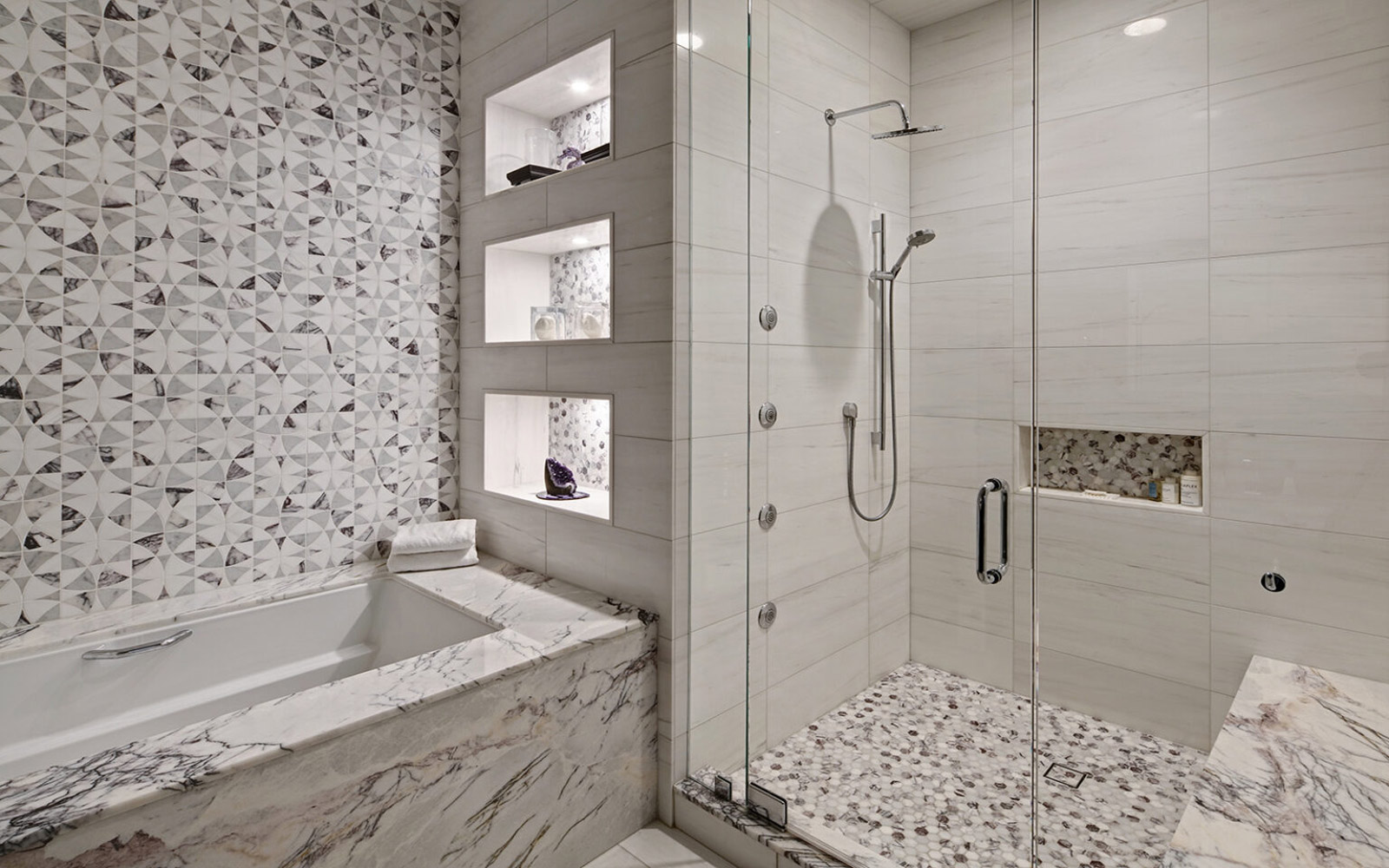
Kelly Trotz appreciates this bathroom from the Drury Design archives featuring Lilac marble. Her own primary bathroom boldly features quartzite and travertine. “I love interacting with natural materials every day,” she says.
A Life Well Lived
Senior Designer Kelly Trotz encourages clients to think even further into the future.
Nothing stays new forever. Not natural stone. Not engineered surfaces. Not hardwood floors. Not even us.
That reality doesn’t discourage her. In fact, it’s one of the reasons she’s drawn to natural materials in the first place.
“There’s an educational element to choosing materials,” Kelly says.
“You’re going to be interacting with these materials every day as you age, too. So you want to make sure that it’s something that you want and can appreciate every day. There’s more out there than just what people see on TV or in magazines. I’m here to help you do your homework. That’s the important takeaway – rely on the experts who know how these things should be handled and where they should go.”
Everything around us changes with time. Kelly believes homeowners sometimes put unnecessary pressure on themselves to keep their homes looking untouched. A scratch appears and it immediately feels like something has gone wrong. But homes aren’t museums. They’re places where families gather, meals are prepared, holidays are celebrated and children grow up.
“When you stop thinking about materials as objects that have to stay perfect forever, you start enjoying them differently. You realize they’re becoming part of your story. To me, that age is a sign of a life well lived.”
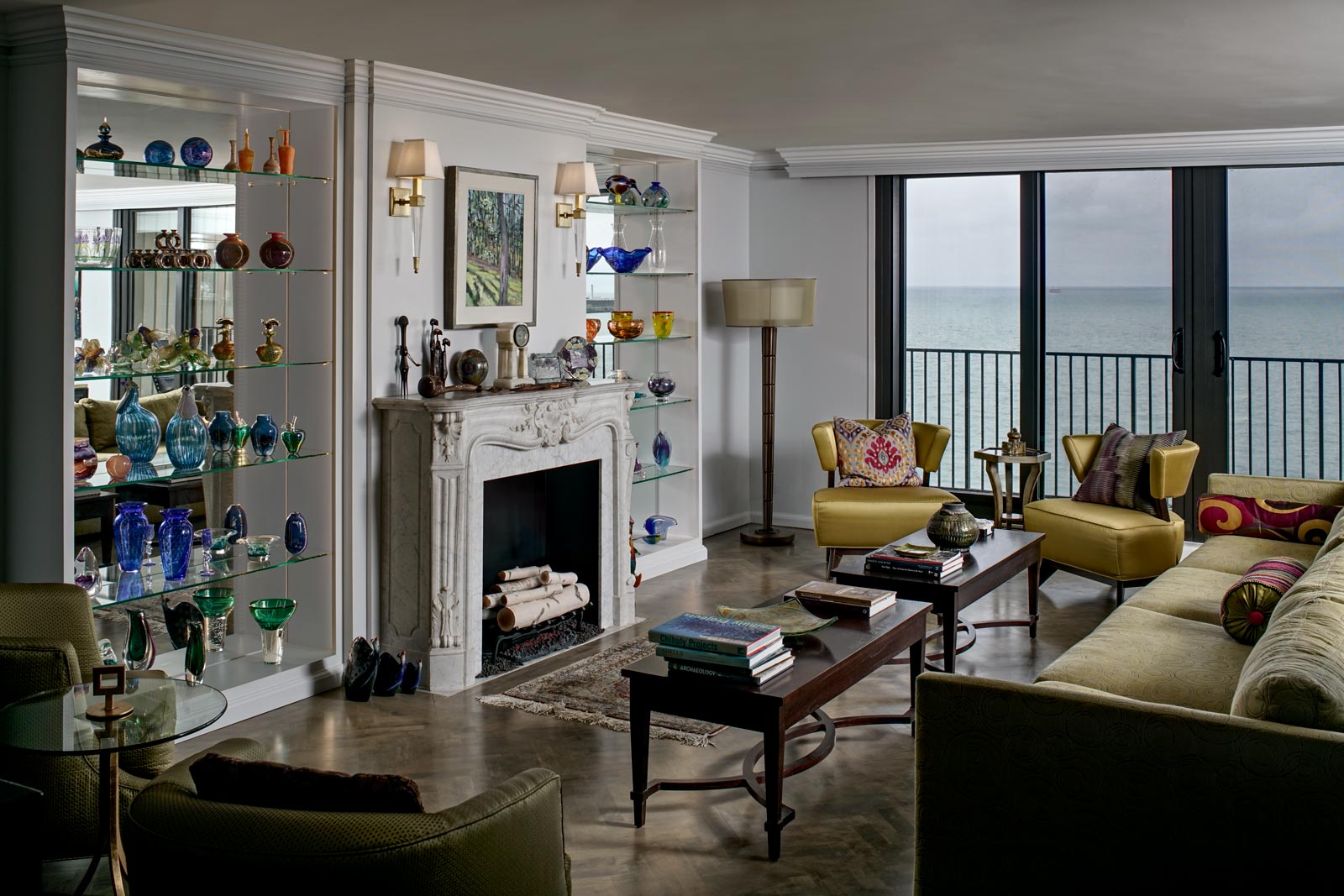
When Gladys Schanstra’s clients inherited an antique marble fireplace, it became the focal point of their new living room, anchoring a space that beautifully balances modern glass art with vintage furniture.
Beauty Matters
By the time the conversation reached Gladys Schanstra, it was no longer about countertops. It was about beauty.
“I think we’re naturally drawn to beautiful things. Why is beauty important? Why is art important? Why do people travel halfway around the world to see a cathedral or a painting or a landscape? Those experiences don’t necessarily serve a practical purpose. They remind us that beauty enriches our lives.”
Gladys believes natural materials tap into that same instinct.
“We’re part of nature. We’re surrounded by it every day. Stone looks different with time. Wood, even more so. Flowers bloom and fade. Seasons change. That’s simply how the natural world works. When people choose materials that reflect those qualities, I think they’re responding to something that’s very human.”
A Beautiful Way to Live
So, back to those flowers in Charleston. Three days later, they were gone. But that was never the point.
The bouquet Gladys carried back to her hotel room wasn’t about permanence. It was about surrounding herself with something she found beautiful, if only for a few days.
The materials we choose for our homes ask much the same question. Some prioritize consistency. Others embrace character. Neither is inherently better.
The best choice is the one that reflects the way you want to live.